The Magic and Mystery of Loreto, Italy
When you stay at La Casa Carlotta you are perfectly positioned to uncover some of Italy's best-kept secrets that is Loreto.
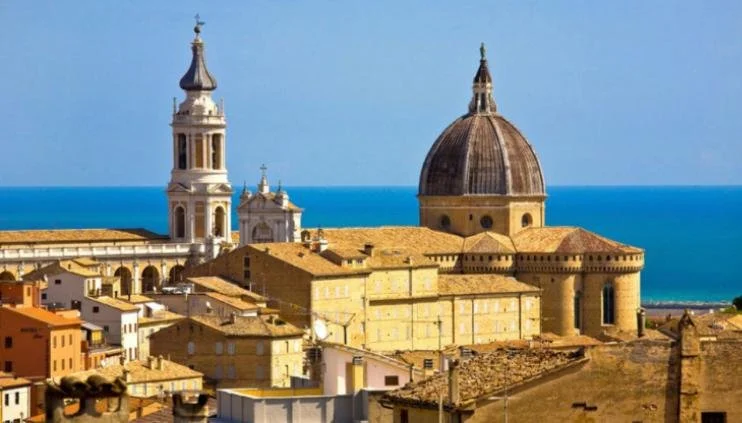
Perched elegantly on a hillside overlooking the Adriatic Sea, this majestic hilltop sanctuary is home to one of the most sacred pilgrimage sites in the Catholic world. This grand, fortress-like town protects an ancient treasure: the stone walls believed to be the birthplace of the Virgin Mary. Loreto is circa 30 kilometres from La Casa Carlotta and the drive usually takes no more than 40 minutes.
The heart of Loreto is entirely defined by the Santa Casa—the Holy House of Mary. According to Christian tradition, these three stone walls originally stood in Nazareth and formed the home where Mary was born, raised, and ultimately visited by the Archangel Gabriel during the Annunciation.
The Miraculous Legend: In 1291, as the Crusaders were losing control of the Holy Land, tradition says a company of angels physically lifted Mary’s brick-and-stone house and flew it across the Mediterranean to protect it. After a few brief stops, the angels deposited the house in a laurel grove (lauretum, giving the town its name, Loreto) in December 1294. Because of this airborne journey, Our Lady of Loreto was officially named the Patroness of Aviators and Travellers by the Church.
The Historical View: Modern archival discoveries suggest a slightly more earthly—but no less romantic—history. Records indicate that a noble Byzantine family named Angeli (meaning "Angels") rescued the stones of the house from Nazareth and safely transported them to Italy by ship to safeguard them from the conflict.
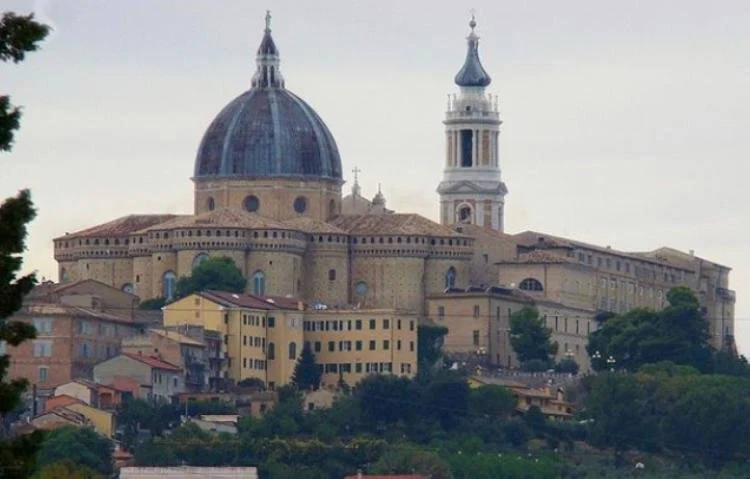
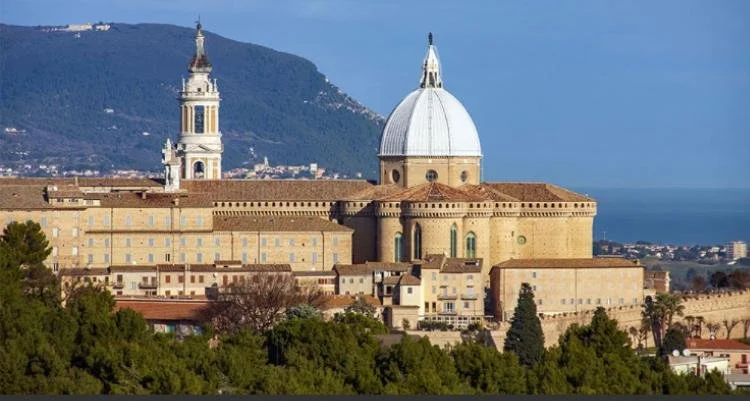
Regardless of which history you follow, the entire city of Loreto literally rose up around these holy walls, transforming it into a towering sanctuary.
The historic centre of Loreto radiates outward from a single, breathtaking square. Make sure to visit these key sights during your day trip:
Basilica della Santa Casa: Built between 1469 and 1587, this architectural marvel was constructed as a reinforced fortress to protect the Holy House from pirate attacks along the coast. Renowned artists like Bramante and Sangallo contributed to its design. Don't miss walking the Camminamenti di Ronda—the elevated, covered military patrol walkways that offer stunning panoramic views stretching out to the Adriatic Sea.
The Holy House of the Madonna: Located directly underneath the basilica's massive central dome, the Holy House consists of three simple, windowless stone walls. To protect the fragile structure, Pope Julius II commissioned Bramante in 1507 to encase the outside in an incredibly opulent, carved marble monument featuring scenes from Mary’s life. Inside sits the famous, dark cedarwood statue of Our Lady of Loreto (The Black Madonna), beautifully framed by soft candlelight. The two deep grooves in the marble floor surrounding the house are worn straight into the hard stone by the knees of millions of pilgrims over the centuries.
Piazza della Madonna: Loreto’s grand central square will leave you speechless. It features the monumental Fontana Maggiore, a massive Baroque marble and bronze fountain designed by Carlo Maderno. Keep an eye out for local Madonnari (street artists) who use coloured chalk to sketch breathtaking religious masterpieces right onto the pavement.
The Apostolic Palace & Art Gallery: Framing the northern and western sides of the main piazza, this grand palace houses the Holy House Museum. It is home to a world-class collection of sacred art, tapestries, and late masterpieces by the famous Renaissance painter Lorenzo Lotto, who spent the final years of his life as an oblate monk right here in Loreto.
Returning to La Casa Carlotta in the evening to lounge by the private pool with a glass of local Verdicchio wine is the absolute perfect way to process a day filled with such immense art, history, and wonder.
Get in touch
Related Articles